Global sustainability debates often treat poverty, jobs, and climate as separate problems. But Prof. Muhammad Yunus’s Three Zero Framework argues they’re inseparable and he proposes a vision of: zero poverty, zero unemployment, and zero net carbon emissions.
In our new open-access published research, we ask a simple question:
What does the global research actually say about “Three Zeros”—and how does it connect to the UN Sustainable Development Goals (SDGs)?
What we did
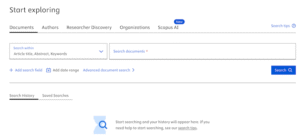
We combined bibliometric science mapping + text mining to get a “big picture” view of the field.
- Data: 1,580 peer-reviewed articles (Scopus), 2001–2024
- Tools: Biblioshiny (R), SciMAT, and the European Commission SDG Mapper
- Goal: identify the field’s evolution, key themes, leading contributors, and map the literature to SDG goals + targets
Key findings (the ones you can reuse)
1) Research attention has surged in the SDG era
The literature was relatively quiet before SDGs, then rose sharply after 2015.
2) The conversation is dominated by energy + climate—less by poverty
Our SDG text-mining results show the strongest links are to:
- SDG 7 (Affordable & Clean Energy): 19% (1057 keyword occurrences)
- SDG 13 (Climate Action): 17.9%
- SDG 2 (Zero Hunger): 17.2%
- SDG 8 (Decent Work & Economic Growth): 11.0%
- SDG 12 (Responsible Consumption & Production): 9.7%
Meanwhile, SDG 1 (No Poverty) appears much less in the keyword mapping (1.9%).
3) The field is thematically “moving toward solutions”
Across 2001–2024, the dominant themes evolve from:
- environmental impacts → greenhouse gases → renewable energy → carbon neutrality,
with recent emphasis on zero-emission, innovation, ecosystems, and investment.
4) There’s a geographic imbalance in research production
The field shows strong concentration in high and upper-middle income contexts (with China as a major contributor), and lower outputs in parts of South Asia and Africa—highlighting a gap between where challenges are most urgent and where publications are concentrated.
Why this matters (for researchers + policy people)
Our review provides a map of what’s already known, what’s over-studied, and what’s still missing—so future work can focus on implementation, equity, and region-specific pathways, not just broad sustainability narratives.
Practical research gaps we highlight
If you’re looking for publishable directions, we synthesize gaps like:
- localized poverty solutions and connecting poverty reduction with green job creation
- shifting food research beyond “availability” toward nutrition, food waste, and circular supply chains
- making carbon-neutral tech affordable and scalable for lower-income contexts
- building sector-specific decarbonization strategies + better data/monitoring
- more real-world case studies of social business / Three Zero implementation
Read the paper
Title: The role of the three zero framework in advancing global sustainable development through bibliometric and text mining analysis
Journal: Discover Sustainability (2025) 6:1128
DOI: 10.1007/s43621-025-01919-x
Cite this work
Faisal-E-Alam, M., Bhuiyan, M.R.I., Mimi, A. et al. The role of the three zero framework in advancing global sustainable development through bibliometric and text mining analysis. Discov Sustain 6, 1128 (2025). https://doi.org/10.1007/s43621-025-01919-x